
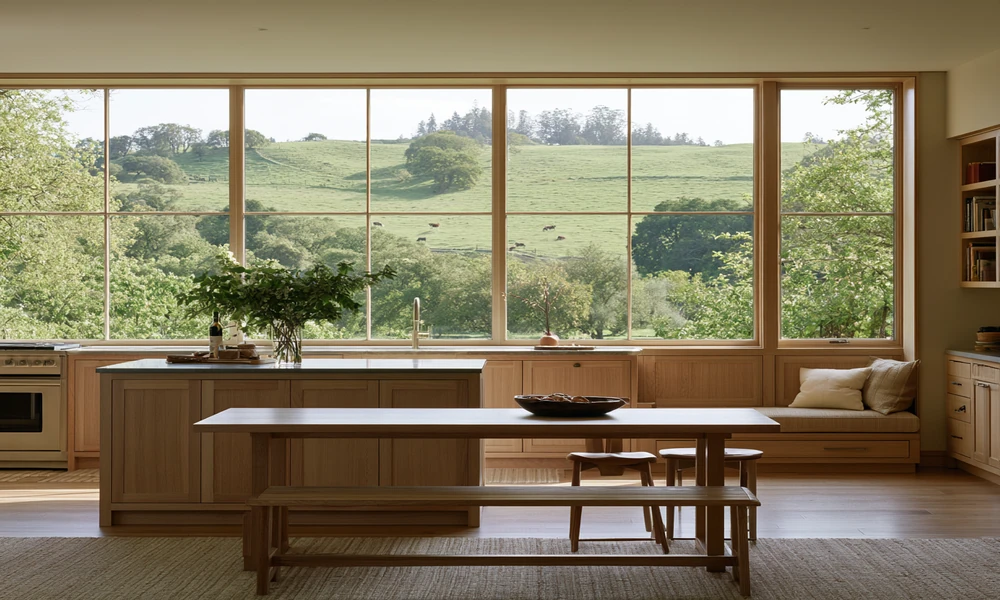
Oak kitchen cabinets can look warm, strong, and expensive. They can also last for many years when the right material and finish are used.
But there is one problem.
Not every cabinet labeled “oak” is the same.
One cabinet may be made from solid white oak. Another may use red oak. Some may only have a thin oak veneer over plywood or engineered wood. Two cabinets can look similar in a product photo while being very different in price, grain, strength, and long-term performance.
This matters even more when you are planning a do it yourself kitchen cabinet project. You may be measuring, ordering, assembling, and installing the cabinets yourself. Buying the wrong type of oak can lead to unexpected color, finishing problems, damaged edges, or a kitchen that simply does not look the way you imagined.
Before placing your order, learn what type of oak you are actually paying for.
Oak Is Not Just One Type of Wood
People often talk about oak as if it is a single material.
It is not.
There are many oak species, but kitchen cabinets are usually connected with two main groups:
- Red oak
- White oak
Both are hardwoods. Both can be strong enough for cabinetry. Both have visible grain.
But they do not look exactly the same.
The type of oak you choose can change the entire style of your kitchen.
That is why the word “oak” on a product description is not enough information.
Red Oak Has a Stronger Grain Pattern
Red oak kitchen cabinet has been used in kitchens for decades.
It normally has a more noticeable grain pattern with curved lines and larger pores. Depending on the stain, the wood may show warm pink, reddish, golden, or brown tones.
Red oak works well if you want a traditional or classic kitchen.
It can also be more affordable than some white oak cabinet options.
For a do it yourself kitchen cabinet project, red oak may be a practical choice because it is widely available and works with many common stains.
The main thing to remember is that its grain is hard to hide.
If you want cabinets that look smooth, quiet, and minimal, red oak may feel too busy.
If you like visible wood character, that same grain can be a major advantage.
White Oak Has a Softer, More Modern Look
White oak has become very popular in modern kitchens.
Its natural color usually ranges from light beige and tan to medium brown. The grain can look straighter and calmer than red oak, especially when certain cuts are used.
White oak works well in:
- Modern kitchens
- Scandinavian-style kitchens
- Transitional kitchens
- Farmhouse kitchens
- Minimal spaces
- Natural wood interiors
A light clear finish can keep white oak looking fresh and soft.
This is one reason people searching for a modern oak kitchen often assume they want white oak.
But even white oak cabinets can look very different from one manufacturer to another.
The cut of the wood matters too.
Plain-Sawn Oak and Quarter-Sawn Oak Look Different
The way a log is cut changes the appearance of the boards.
Plain-sawn oak is one of the most common options. It often shows large curved or cathedral-shaped grain patterns.
This gives the cabinet more movement and natural variation.
Quarter-sawn oak is cut differently.
It usually produces straighter grain lines and may show small decorative marks called medullary rays.
Quarter-sawn white oak is especially popular in higher-end kitchens because it has a clean but natural appearance.
It can also cost more.
If you are building a do it yourself kitchen cabinet setup and want a very specific look, ask how the oak was cut.
Simply ordering “white oak cabinets” does not guarantee straight grain.
Rift-Sawn Oak Gives an Even Cleaner Grain
Rift-sawn oak is another option you may see in premium cabinet collections.
Its grain tends to be straight and consistent.
This makes it popular in modern flat-panel kitchens where designers want the wood grain to run in clean vertical lines.
Rift-sawn white oak can create a very polished appearance, especially across tall pantry cabinets or large kitchen islands.
The downside is cost.
More of the log can be wasted during the cutting process, which can make rift-sawn material more expensive.
For a DIY kitchen, it may be worth using rift-sawn oak only in highly visible areas while choosing a less expensive material elsewhere.
Solid Oak and Oak Veneer Are Not the Same
This is one of the most important details to check before buying.
A cabinet described as “oak” may not be made entirely from solid oak.
Some cabinet doors are solid wood.
Others use oak veneer.
Oak veneer is a thin layer of real oak attached to another material, usually plywood or engineered board.
That is not automatically a bad thing.
High-quality veneer can look excellent and can even remain more stable than a wide solid wood panel.
The problem comes when buyers assume they are getting solid oak and later discover that the cabinet is mostly another material.
Before ordering, check what each cabinet part is made from.
Ask about:
- Door frames
- Center panels
- Drawer fronts
- Cabinet boxes
- Shelves
- Side panels
- Finished ends
This is especially important for a do it yourself kitchen cabinet project because you may need to drill, trim, or modify some pieces during installation.
Oak-Look Laminate Is Not Real Oak
Some cabinets are advertised with names like oak finish, oak effect, natural oak, or oak style.
That does not always mean real wood is used.
The surface may actually be laminate, melamine, or another printed material designed to copy oak grain.
These products can be useful.
They are often affordable, consistent in color, and easy to clean.
But they will not behave like real oak.
You usually cannot sand them deeply or refinish them like solid wood.
A damaged printed surface may also be harder to repair naturally.
Read the material specification carefully before assuming you are buying real oak.
Natural Oak Can Vary From Door to Door
Real wood changes from tree to tree.
Even boards cut from the same tree can show differences in grain and color.
That means your oak cabinets may not look perfectly identical.
One door may be slightly darker.
Another may have stronger grain.
A third may contain a small natural mark.
This variation is often part of the beauty of real wood.
But if you expect every cabinet door to look exactly like the sample image, you may be disappointed.
When planning a do it yourself kitchen cabinet, unpack several doors and panels before installation.
Lay them out together.
This gives you a chance to position similar-looking pieces beside each other and place unusual grain patterns in less noticeable areas.
The Finish Can Change the Oak More Than You Expect
The same oak can look completely different depending on the finish.
A clear coat may preserve the natural color.
A warm stain can make the wood look traditional.
A gray or beige stain can create a more modern appearance.
A darker stain may hide some color variation while making the grain more dramatic.
White oak can also turn more yellow or amber depending on the finish used.
Before applying a finish to unfinished cabinets, test it on a sample piece.
Do not judge a stain only by the color shown on the can.
Oak absorbs stains differently depending on the board, sanding, and grain.
A test piece can save your entire kitchen from becoming a color you did not expect.
Check the Door Construction Before Buying
The type of oak is only part of the story.
You should also check how the doors are built.
For example, a Shaker door may use a solid oak frame with a veneered plywood center panel.
That is common and can be a good construction method.
A flat-panel door may use an oak veneer over a stable core to reduce warping.
Ask the seller for a clear material breakdown instead of relying only on marketing photos.
For DIY installation, knowing the door construction can also help you choose the correct screws, hinges, drill bits, and handling methods.
Think About Repairs Before Installation
DIY kitchens sometimes need small adjustments.
You may accidentally scratch a panel, chip an edge, or drill a hole in the wrong location.
Solid oak is often easier to sand and repair.
Oak veneer can also be repaired, but you must be more careful because sanding through the thin wood layer can expose the core underneath.
Laminate requires a different repair method altogether.
Understanding the material before installation helps you avoid making a small problem worse.
Ask These Questions Before Ordering
- Is this red oak or white oak?
- Is the wood plain-sawn, quarter-sawn, or rift-sawn?
- Which parts are solid oak?
- Which parts use oak veneer?
- What material is used for the cabinet box?
- Is the finish natural, stained, or painted?
- Can I order a door sample?
- Will the grain and color vary?
- Can the surface be sanded and refinished?
- Are replacement doors available later?
These questions can tell you far more than a product photo.
Final Thoughts
An oak kitchen cabinet can be a smart long-term choice, but the word “oak” does not tell you enough.
Red oak and white oak have different looks. Plain-sawn, quarter-sawn, and rift-sawn boards show different grain patterns. Solid oak, oak veneer, and oak-look laminate also have very different construction and repair needs.
For anyone planning a do it yourself kitchen cabinet project, these details matter before the boxes arrive at your home.
Look beyond the color.
Check the wood species, grain cut, construction, finish, and cabinet materials.
Once you know exactly what type of oak you are buying, it becomes much easier to choose cabinets that fit your budget, your DIY skills, and the kitchen style you actually want.
