
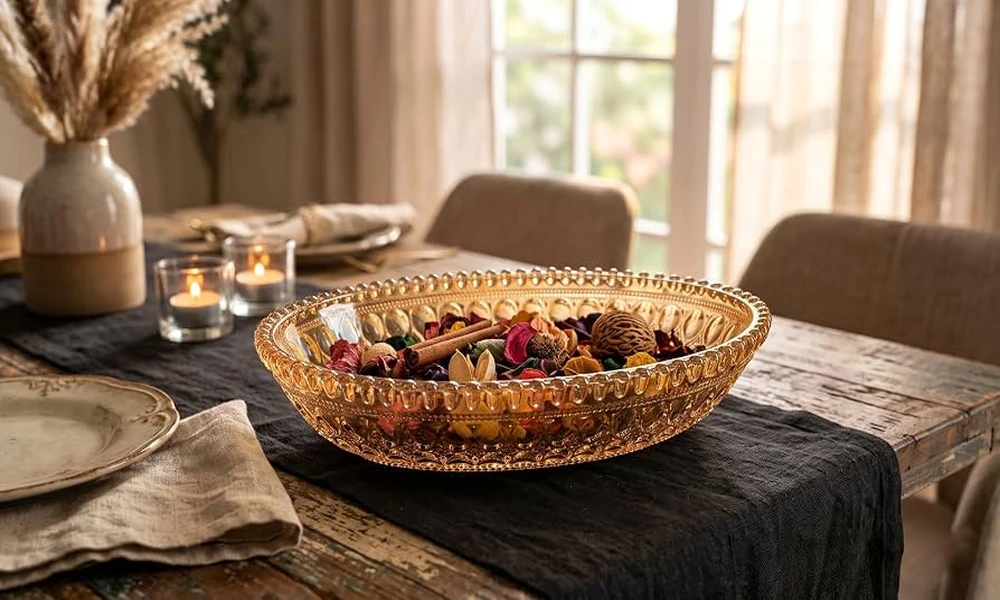
When a dinner table has little spare room, reduce the number of serving vessels before reducing the comfort of the place settings. Give each bowl a specific job, plate some components in the kitchen, and keep only the shared accompaniment people will actually use. Foods can remain distinct without every ingredient needing its own dish at the table.
Assign each dish a clear purpose
Set the empty dishes on the table before preparing dinner. This shows whether the planned arrangement works while it is still easy to change. A bowl that seems modest in the cupboard may occupy the only space between two place settings. Look at the whole table, including glasses and serving utensils, rather than judging each vessel separately.
Ask what each dish contributes to service. A bowl holding the main food has an obvious role. A second bowl holding a topping already present in the filling may be optional. A decorative plate underneath another dish may add no useful function at all. Remove what does not earn its footprint.
Fully Loaded Potato illustrates how the filling can influence this decision. It contains potato, cheddar, smoked pork bacon, onion, butter, and sour cream in a full-size pierogi. A meal centered on that variety does not automatically need separate bowls of every loaded-potato topping. You may enjoy one, but the filling already establishes the flavor direction.
Account for the utensils as well as the vessels. A serving spoon needs somewhere sensible to rest, and a ladle extending over a neighboring plate can make a small bowl surprisingly intrusive. The complete object on the table is the dish plus the space required to use it.
Choose plates that can hold distinct components
Individual plates can carry the dumplings and an accompaniment without turning them into one mixed dish. Choose a plate with enough usable surface for the meal, and arrange the components so they can be eaten comfortably. Do not compensate for limited table space by piling everything into a precarious mound.
Consider whether a sauce will run into other food. If separation matters to the meal, use a suitable small vessel or choose a less fluid accompaniment. Combining components physically should be a deliberate serving decision. It should not happen merely because you ran out of bowls after cooking.
Plate in the kitchen when that fits the household. The serving bowl can remain there, while diners receive a complete place setting at the table. Someone wanting more can ask or return to the kitchen. This arrangement may be easier than asking everyone to pass several large dishes through a narrow gap.
Make portions adjustable through conversation. Ask whether the person wants the side before placing it on the plate, particularly if it would be difficult to remove cleanly afterward. Fewer shared vessels should not mean less choice about what someone receives.
Keep ingredient identities clear. Fully Loaded Potato contains pork, so describe it accurately rather than calling the meal simply potato dumplings. If another filling is being served for someone else, use an arrangement that preserves the distinction. Saving one bowl is not useful if it makes the food difficult to identify.
Keep one shared accompaniment within reach
Choose the shared item that genuinely benefits from table access. It might be a condiment that people want in different amounts. Place it where it can be reached or passed without moving glasses and plates every time. A shared bowl should support the meal’s flow rather than become a recurring puzzle.
The rest of the accompaniments can be incorporated into the initial plating or kept in the kitchen. That does not make them less available. It simply distinguishes food that needs to be constantly within reach from food that can be served once and replenished if wanted.
If you have not settled the dumpling filling, the Virginia Beach selection guide from Holy Perogy can help identify which flavors are already inside the product. Use that information to decide whether an additional table topping contributes something new. Then look for the chosen variety through a retailer rather than buying several fillings to fill an imagined display.
A compact arrangement can still accommodate different preferences. Offer the shared condiment separately and let people choose whether to use it. If a guest needs another item, bring it when requested rather than placing every possible option on the table from the outset.
Remove empty dishes as the meal progresses
An empty bowl no longer needs its original position. Move it to a suitable clearing area when it has finished serving its purpose, particularly if it blocks a drink or another person’s reach. Do this unobtrusively, without treating the first empty vessel as a signal that everyone should hurry through dinner.
Avoid stacking used dishes beside someone who is still eating. That simply transfers the crowding from the center to their place setting. Take the item away if you can do so comfortably, or leave it until a natural break. The aim is usable space, not constant activity around the table.
Notice which vessels remain untouched. If a topping bowl returns to the kitchen unused, it may not belong in the next version of this meal. Let actual use guide the arrangement. Over a few dinners, the table can become better suited to your household without purchasing a new set of dishes.
The useful serving bowl is the one that helps food reach a person. Keep that simple purpose in mind, and a small table can hold a complete, clearly arranged meal without carrying every vessel involved in preparing it.
