
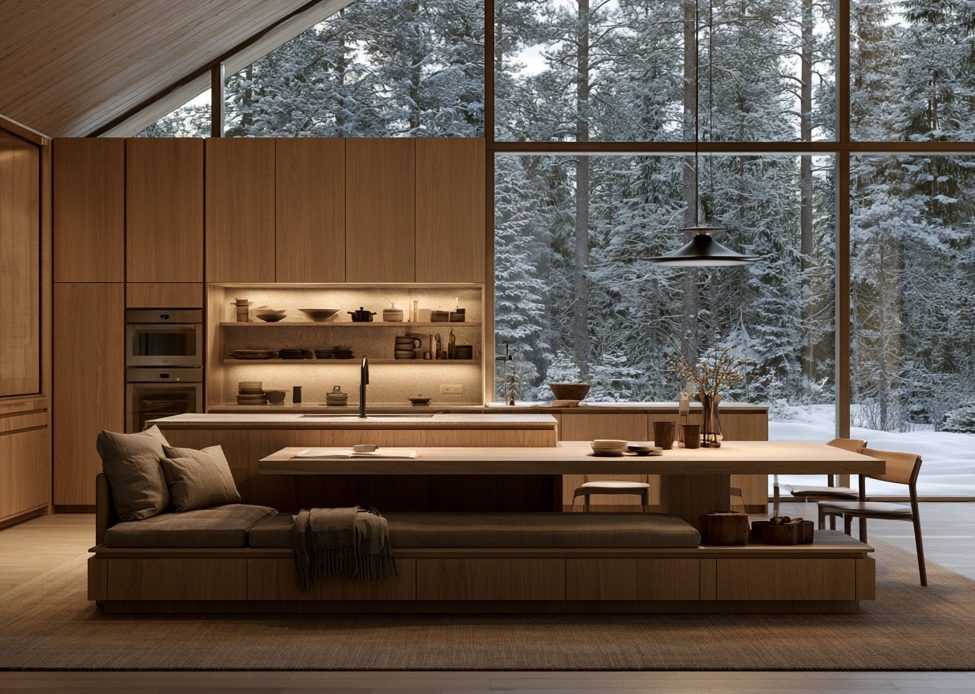
Sometimes a kitchen does not need a complete makeover.
It may not need new flooring, expensive appliances, or a full wall of custom cabinets. Sometimes, one carefully chosen feature can change how the entire room feels.
A white oak kitchen cabinet can do exactly that.
White oak has a warm, natural appearance that feels different from bright white paint, dark wood, or glossy modern finishes. Even when used in only one part of the kitchen, it can make the space feel warmer, calmer, and more thoughtfully designed.
The interesting part is that you do not always need to replace every cabinet with white oak.
One cabinet, one island, or one section of cabinetry can introduce enough natural texture to change the personality of the whole kitchen.
Why White Oak Feels So Different
Walk into a kitchen filled with smooth white surfaces, and the room may feel clean and bright.
Add white oak, and something changes.
The space suddenly has texture.
White oak usually has a light to medium natural color with visible grain patterns. Depending on the finish and cut of the wood, you may see soft beige, tan, honey, or slightly brown tones.
Those natural variations prevent the cabinet from looking flat.
Instead of seeing one solid color, your eyes notice lines, grain, and small changes in tone.
That is one reason a white oak kitchen cabinet can become such a strong design feature. It brings some of the outdoors into a room that is usually filled with hard surfaces such as stone, metal, glass, and tile.
One Cabinet Can Become the Starting Point
Imagine a mostly white kitchen.
The upper and lower cabinets are white. The countertop is light. The walls are neutral.
It looks nice, but perhaps it feels a little plain.
Now replace one tall pantry cabinet with white oak.
Suddenly, that cabinet becomes a visual anchor. The grain adds movement, while the warmer color breaks up the large amount of white.
You can then repeat small touches of that wood tone elsewhere.
A wooden cutting board, floating shelf, stool, or light fixture may be enough to connect everything.
The result can look like a complete design decision even though you only changed one major cabinet.
That is the power of using materials carefully instead of simply using more of them.
White Oak Can Warm Up a Modern Kitchen
Modern kitchens often use simple shapes and clean lines.
That can create a beautiful space, but too many smooth surfaces can sometimes make the kitchen feel cold.
White oak offers an easy way to soften the look.
Consider a kitchen with flat-panel white cabinets, a pale stone countertop, stainless steel appliances, and simple lighting.
Adding a white oak kitchen cabinet introduces natural grain without destroying the modern style.
The cabinet can still have a simple door design. The difference comes from the material itself.
This creates a useful balance.
The kitchen stays clean and modern, but it also feels more comfortable and welcoming.
It Works With More Than White
Despite the name, white oak does not have to live inside a white kitchen.
It can pair beautifully with many colors.
Deep green cabinets can look richer beside natural oak. Navy can create a strong contrast. Black cabinetry can feel less heavy when balanced with a lighter wood tone.
Warm cream, beige, and greige can create a softer look.
Even colorful kitchens can benefit from white oak because natural wood often works like a neutral surface.
The key is paying attention to undertones.
Place actual samples beside your cabinet color, countertop, flooring, and backsplash before making the final choice. A wood tone that looks perfect online may appear warmer or cooler under your kitchen lighting.
The Island Is an Obvious Place to Use It
If one small cabinet does not provide enough impact, consider the kitchen island.
An island naturally attracts attention because it often sits near the center of the room.
Using white oak on the island while keeping the surrounding cabinets another color can create a custom appearance without covering the entire kitchen in wood.
For example, imagine white perimeter cabinets with a white oak island.
The white keeps the room bright. The oak adds warmth and gives the center of the kitchen more visual weight.
You can reverse the idea too.
A kitchen with darker cabinets could use a lighter white oak island to make the room feel less heavy.
White Oak Grain Is Part of the Design
With painted cabinets, the color usually receives most of the attention.
With white oak, the grain matters just as much.
Some pieces have straighter, more even lines. Others show more movement and variation.
That means two white oak kitchen cabinet doors may not look exactly the same.
This is not necessarily a flaw.
It is part of using a natural material.
If you want a very clean and consistent kitchen, pay attention to how the wood is selected and matched across doors and drawer fronts.
For a more relaxed look, greater natural variation can give the cabinetry additional character.
Either approach can work. The important thing is knowing what appearance you want before ordering.
Hardware Can Completely Change the Mood
Put different hardware on the same white oak cabinet and you can create very different personalities.
Simple black pulls can make white oak feel modern and bold.
Brass-tone hardware can create a warmer and slightly more luxurious appearance.
Polished metal may push the cabinet toward a cleaner contemporary style.
You can also choose very minimal hardware or integrated pulls if you want the wood grain to receive most of the attention.
This makes white oak surprisingly flexible.
The wood provides the foundation, while the smaller details help decide whether the finished kitchen feels modern, traditional, Scandinavian-inspired, rustic, or somewhere in between.
Lighting Matters More Than You Think
Never judge white oak under only one type of light.
Natural sunlight can bring out warmth and grain that may look different at night under artificial lighting.
The temperature of your kitchen lights matters too.
Very warm lighting may make the oak appear more golden. Cooler lighting can reduce some of that warmth.
Before committing to a finish, look at a sample in the actual kitchen.
Check it in the morning.
Look again in the afternoon.
Then check it at night with your kitchen lights turned on.
This simple test can prevent an expensive surprise.
Do Not Forget the Finish
White oak can change dramatically depending on how it is finished.
A clear or natural-looking finish can keep the wood close to its original appearance. Other finishes can make it look warmer, darker, softer, or more muted.
If you love the light appearance of white oak, be careful about choosing a finish that adds too much yellow or orange.
The finish also has a practical job.
Kitchen cabinets face fingerprints, cooking oils, moisture, spills, and daily cleaning. A beautiful wood surface still needs suitable protection for kitchen use.
Appearance matters, but durability matters too.
You Do Not Need White Oak Everywhere
One of the easiest design mistakes is finding a material you love and then using too much of it.
White oak can be beautiful, but covering every cabinet, shelf, wall feature, stool, and piece of furniture with the same wood may reduce its impact.
Contrast gives materials room to stand out.
A single white oak kitchen cabinet surrounded by painted cabinetry can become special because it is different.
The same idea works with a white oak pantry wall, beverage station, island, or coffee area.
Instead of asking, “How can I add more white oak?” ask, “Where would white oak make the biggest difference?”
That question often leads to a more interesting kitchen.
Small Change, Completely Different Feeling
Kitchen design is not always about replacing everything.
Sometimes it is about finding the one element the room is missing.
A kitchen that feels too cold may need warmth. A plain white kitchen may need texture. A dark kitchen may need a lighter natural element. A modern kitchen may need something organic to keep it from feeling too sharp.
A white oak kitchen cabinet can answer all of those problems without demanding attention in an obvious way.
It does not need a dramatic color or complicated door design.
The natural grain does much of the work.
Used carefully, even one white oak feature can influence the colors, textures, hardware, and accessories around it. What started as a single cabinet can become the detail that finally makes the whole room feel connected.
And sometimes, that is all a kitchen needs to develop an entirely new personality.
